Fiji vs Scotland: A Rugby Rivalry of Contrasting Styles
- Introduction to a Fascinating Clash
- The Head-to-Head: History Favours Scotland
- Flamboyance vs. Structure: Analysing the Playing Styles
- Classic Battles and Historic Upsets
- Influence of Key Players Through the Years
- Recent Form and What to Expect
- Why This Matchup Captivates Fans
- Fiji vs Scotland: More Than Just a Game
Fiji vs Scotland is a rugby matchup that always promises excitement, pitting the raw, unpredictable flair of the Pacific Islanders against the tactical nous and set-piece strength of the northern hemisphere side. Having watched these two teams compete over the years, including some truly memorable encounters, I’ve always been captivated by the stark contrast in their approaches to the game and how that plays out on the pitch. This clash isn’t just about the final score; it’s a fascinating study in differing rugby philosophies. We’ll dive into the history, the styles, and what makes Fiji Scotland rugby encounters so compelling for fans around the world.
The Head-to-Head: History Favours Scotland
Looking at the historical record, Scotland has held a significant advantage over Fiji. The two nations first met back in 1982. Since then, Scotland has won the majority of their encounters. As of July 2025, they have met 13 times in test matches, with Scotland winning 10 and Fiji securing just 3 victories. This includes a run of recent wins for Scotland. Their last meeting in November 2024 saw Scotland win convincingly 57-17 at Murrayfield.
However, Fiji’s wins, though fewer, have often come with significant impact, particularly when playing at home. Their victories in 1998 and 2017 were both achieved in Suva. The 1998 match, a stunning 51-26 win, is still considered a legendary performance by the Flying Fijians, marking their first victory over a Six Nations side. This historical perspective reminds us that while the overall record leans heavily towards Scotland, Fiji certainly possesses the capability to produce game-breaking performances, especially in front of a passionate home crowd.
This is the kind of statistical dominance that defines the Scotland Fiji matches storyline – one side generally on top, but the other capable of explosive upsets that live long in the memory. It adds a layer of unpredictability, even within a seemingly one-sided history.
Flamboyance vs. Structure: Analysing the Playing Styles
The fundamental difference between Fiji and Scotland lies in their core rugby identities. Fiji, often dubbed the “Flying Fijians,” are renowned globally for their thrilling, high-tempo, and unstructured style of play. Their game is built on individual brilliance, incredible athleticism, powerful ball carrying, and world-class offloading in contact. Growing up watching players like Waisale Serevi, it was clear this wasn’t traditional, rigid rugby. It’s fluid, dynamic, and often breathtakingly creative. They excel in broken play and can turn defensive situations into try-scoring opportunities in the blink of an eye.
Scotland, conversely, represents a more traditional northern hemisphere approach. Their game is typically characterised by strong set-piece work – the scrum and lineout – tactical kicking, and well-drilled defence. While they’ve developed a more expansive attack under coaches like Gregor Townsend, incorporating skilled playmakers and dangerous outside backs, their foundation remains built on structure, discipline, and control. Think of key figures like Finn Russell orchestrating the attack, or a disciplined forward pack competing hard at the breakdown.
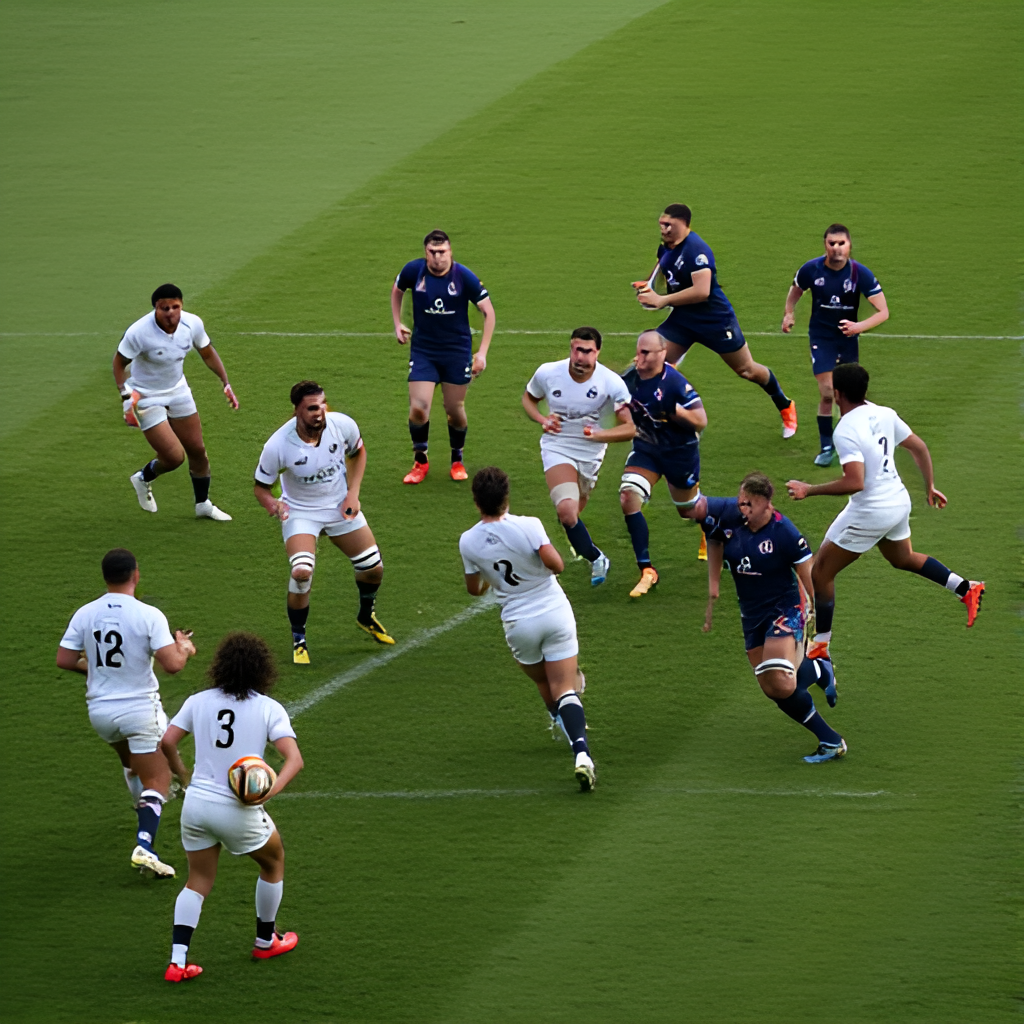
This image is a fictional image generated by GlobalTrendHub.
When Fiji vs Scotland meet, it becomes a fascinating clash of these philosophies. Can Fiji’s spontaneous brilliance break down Scotland’s organised defence? Or can Scotland’s control starve Fiji of the possession and space they need to unleash their potent attack? My personal observation has always been that the team that manages to impose their style on the other usually comes out on top. If it’s loose and fast, Fiji thrives. If it’s tight, set-piece heavy, and tactical, Scotland often dictates terms.
Fiji’s Attacking Flair
Fiji’s attacking game is truly unique. It’s almost like watching a high-stakes game of rugby sevens in a 15s format at times. They prioritise keeping the ball alive through incredible offloads, seeking to bypass defenders rather than go through them in a static ruck. This requires immense skill and trust between players. Their backs, often featuring powerful runners and elusive sidesteppers, are capable of creating magic from anywhere on the field. The Fiji Scotland test matches that favour Fiji often see them scoring multiple tries from long range or quick transitions.
Scotland’s Tactical Approach
Scotland’s game, while evolving, still places a high value on territory and possession gained through solid fundamentals. They look to build pressure through strong defensive sets, accurate kicking, and clinical finishing when opportunities arise. Their forward pack is crucial in providing a platform, securing breakdown ball, and applying pressure at the scrum and lineout. The recent Scottish teams have added a real cutting edge in the backline, capable of executing complex moves and exploiting defensive weaknesses with precision passing and running lines.
Classic Battles and Historic Upsets
While the overall head-to-head record might suggest a lack of competitiveness, several Fiji vs Scotland matches stand out as captivating contests that defy the statistics. The aforementioned 1998 match in Suva is a prime example, where Fiji put on an attacking masterclass to win 51-26. That day, everything clicked for Fiji – the offloads stuck, the breaks came off, and they ran in tries from all angles, leaving Scotland stunned.
Another notable game was in 2017, again in Suva, where Fiji secured a hard-fought 27-22 victory. This was a tighter affair than the 1998 classic, demonstrating Fiji’s growing ability to manage a game and defend stoutly when needed. It was a significant win against a Scotland side that was on the rise under Gregor Townsend.
On Scotland’s side, there have been dominant performances too, such as the 54-17 win in 2018 and the more recent 57-17 victory in November 2024. These results show Scotland’s capability to overpower Fiji when their structure holds and they capitalise on Fijian errors. These games, win or lose, are rarely boring, often featuring moments of individual brilliance from both sides.
Influence of Key Players Through the Years
Every era of Fiji vs Scotland rugby has been defined by key individuals who embody their team’s style. For Fiji, legends like Waisale Serevi are synonymous with the magic of their attack. His vision, step, and offloading ability were unparalleled. More recently, players like Josua Tuisova and Semi Radradra have brought immense power and finishing ability to the backline, while forwards like Leone Nakarawa redefined the second row with their handling skills.
For Scotland, figures like Gavin Hastings in earlier eras brought a composed class and powerful boot. In more recent times, players such as Greig Laidlaw’s leadership and tactical control at scrum-half, and the attacking threat posed by wingers like Darcy Graham or Duhan van der Merwe, alongside the creativity of fly-halves like Finn Russell, have been pivotal.

This image is a fictional image generated by GlobalTrendHub.
Watching these individual battles within the team context adds another layer of intrigue to the Scotland Fiji rugby matches. Can Fiji’s star power unlock Scotland’s defence? Can Scotland’s defensive system contain Fiji’s most dangerous runners? It’s often the performance of these key players that swings the momentum of the match.
Recent Form and What to Expect
Looking at recent history, Scotland has held the upper hand, winning the last three encounters since Fiji’s 2017 victory. The November 2024 match was a dominant display from Scotland. However, Fiji continues to develop, with the influence of the Fijian Drua team in Super Rugby providing a professional pathway and helping bridge some of the historical gaps in set-piece and structure. Fiji also recently pushed Australia hard in a test match, showing their continued competitiveness.
Scotland, under Gregor Townsend, continues to be a competitive force in the Six Nations and on the international stage, known for their fast-paced game and dangerous backs. While they might bring youthful squads on Southern Hemisphere tours, they remain a well-drilled and disciplined unit.
Anticipating a future Fiji vs Scotland match means expecting the unexpected, particularly when played in Suva. Fiji will bring their trademark intensity, physicality, and desire to keep the ball alive. Scotland will counter with tactical kicking, strong defence, and hopefully, their own moments of attacking flair born from structure. The breakdown will be a crucial battleground, as will the ability of each team to handle the other’s kicking game.
Why This Matchup Captivates Fans
For me, the enduring appeal of fiji vs scotland lies precisely in the contrast. It’s a beautiful illustration of different rugby cultures and approaches colliding. You have the structured, historical rugby nation from Europe facing the free-spirited, immensely talented side from the Pacific. It’s never a dull affair. The potential for a dazzling try from Fiji is always present, as is Scotland’s ability to execute a perfectly weighted kick or a clinical set-piece move.
There’s a romance to the Fijian approach that captivates fans, and a gritty determination about Scotland that earns respect. The historical upsets add drama, and the individual matchups between players are often worth the price of admission alone. It’s a fixture that reminds us of the global nature of rugby and the diverse ways the game can be played at the highest level. I recall watching the 2017 game and being absolutely on the edge of my seat as Fiji held on for the win – a perfect example of their resilience at home.
Fiji vs Scotland: More Than Just a Game
In conclusion, the fiji vs scotland rugby rivalry is a compelling narrative within the international game. While Scotland holds a clear advantage in the overall head-to-head record, Fiji has shown they can rise to the occasion, particularly on home soil, delivering historic performances that are etched in the memory of rugby fans. The clash of Fiji’s electrifying flair against Scotland’s tactical structure and discipline makes for fascinating viewing, showcasing the beautiful diversity of rugby union.
These matches are more than just contests for rankings or bragging rights; they are celebrations of distinct rugby identities and the incredible talent each nation produces. Whether you favour the unpredictable brilliance or the controlled execution, a game between Fiji and Scotland is guaranteed to provide drama, skill, and passion. As someone who appreciates both sides of the rugby coin, I always look forward to seeing how this captivating matchup unfolds.