Apollo 13 Mission: A Successful Failure Story
- Introduction: Facing the Unexpected in Space
- What Went Wrong: The Apollo 13 Incident Unfolds
- The Lunar Module as a Lifeboat: Survival Against the Odds
- Ingenuity on the Ground: Mission Control’s Critical Role
- Challenges of the Journey Home: Cold, CO2, and Conserving Power
- Return to Earth: A Harrowing Reentry and Safe Splashdown
- The Enduring Legacy of the Apollo 13 Mission
- Conclusion: Why the Apollo 13 Mission Still Inspires
The Apollo 13 mission is undoubtedly one of the most dramatic and inspiring stories in the history of space exploration. As someone who grew up captivated by tales of astronauts and their daring journeys, the events of April 1970 stand out as a stark reminder of the inherent risks – and incredible human resilience – involved in pushing the boundaries of what’s possible. This wasn’t a mission that went entirely to plan; in fact, it became a desperate fight for survival hundreds of thousands of kilometres from Earth. The “successful failure” of this particular Apollo spaceflight taught NASA and the world invaluable lessons about adaptability, teamwork, and the sheer power of human ingenuity under pressure.
What Went Wrong: The Apollo 13 Incident Unfolds
Launched on April 11, 1970, from Kennedy Space Center, the Apollo 13 mission was intended to be the third human landing on the Moon. The crew consisted of Commander Jim Lovell, Command Module Pilot Jack Swigert, and Lunar Module Pilot Fred Haise. Swigert was a late addition, replacing Ken Mattingly just days before launch due to concerns about measles exposure.
The journey began smoothly, almost routinely, which perhaps contributed to a sense of complacency back on Earth; space travel, by 1970, was losing some of its novelty for the public. But just under 56 hours into the flight, while the spacecraft was approximately 320,000 kilometres from Earth, a routine request from Mission Control to stir the oxygen tanks in the Service Module (SM) led to disaster. Inside Oxygen Tank No. 2, damaged wire insulation ignited, causing a fire and a rapid pressure build-up that resulted in a catastrophic explosion. The explosion wasn’t just a jolt; it ripped open a panel on the Service Module and compromised the spacecraft’s vital oxygen supply and electrical power.
The famous, slightly misquoted line – “Houston, we’ve had a problem” – was radioed back by Swigert, quickly followed by Lovell. The severity of the situation rapidly became clear: the lunar landing was off. The new, urgent objective was simply to get the crew home alive.
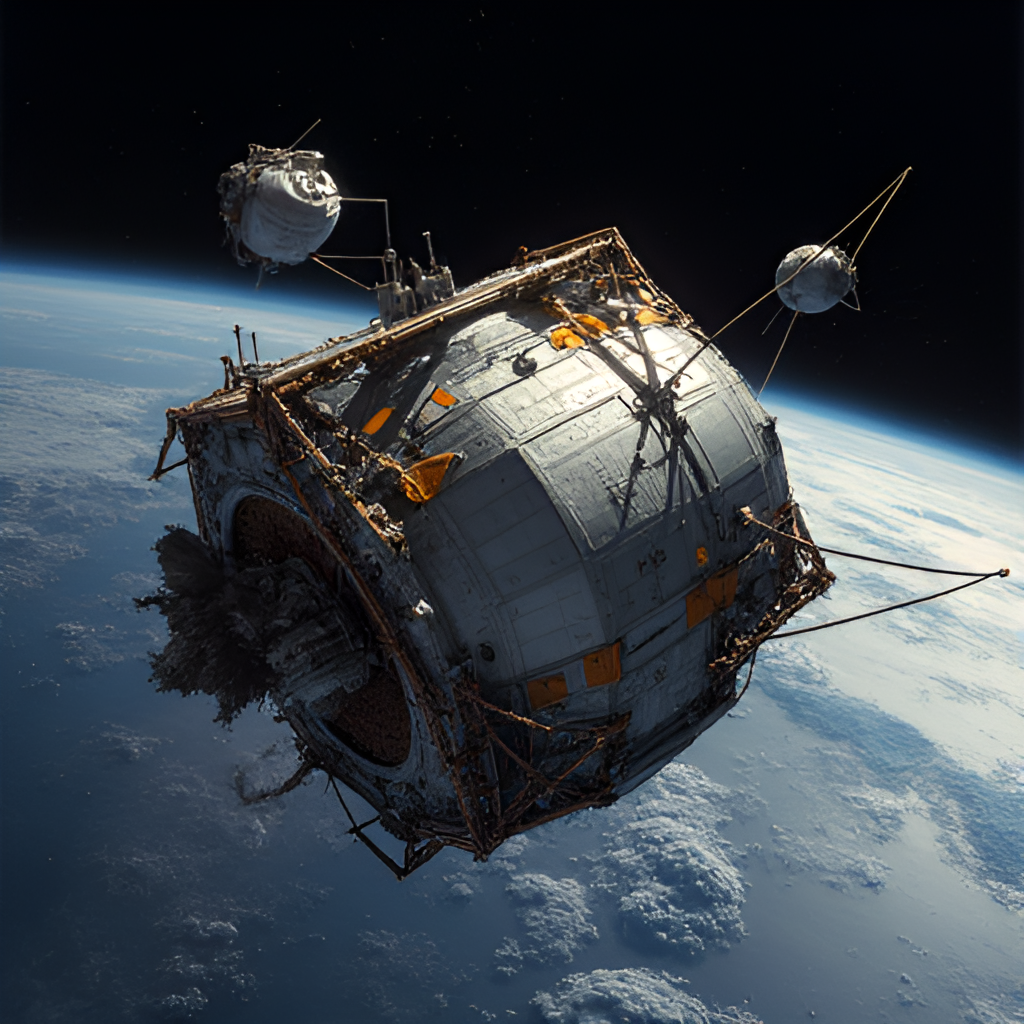
This image is a fictional image generated by GlobalTrendHub.
The Lunar Module as a Lifeboat: Survival Against the Odds
With the Command Module (named Odyssey) crippled, its normal power and life support systems disabled, the crew faced a dire situation. The Service Module, designed to provide power, oxygen, and propulsion during the transit to the Moon and back, was severely damaged. Without oxygen, the fuel cells couldn’t generate electricity or water.
In a move that wasn’t originally planned for this specific type of emergency, the Lunar Module (LM), named Aquarius, became the crew’s only hope. Designed to support two astronauts for about two days on the lunar surface, Aquarius suddenly needed to sustain three astronauts for nearly four days during the perilous journey back to Earth.
Moving into the cramped confines of the LM meant shutting down the Command Module almost entirely to conserve its limited battery power for the crucial reentry phase. This shift was unprecedented and required ground controllers to hastily write and test new procedures in simulators before relaying them to the crew thousands of kilometres away. It was an incredible feat of real-time problem-solving.
Ingenuity on the Ground: Mission Control’s Critical Role
The story of Apollo 13 is as much about the heroes on the ground in Houston as it is about the astronauts in space. The teams at Mission Control, led by figures like Flight Director Gene Kranz, worked tirelessly and creatively to devise solutions to unforeseen problems.
One of the most famous examples of this ingenuity was the challenge of rising carbon dioxide levels in the LM. The LM’s life support system used lithium hydroxide canisters to scrub CO2 from the air, but it only had enough for two people for two days. The Command Module had canisters too, but they were a different shape and couldn’t connect to the LM’s system.
Faced with potentially lethal CO2 levels, engineers on Earth famously cobbled together a solution using only materials available to the astronauts on board: plastic bags, cardboard, and duct tape. They then radioed instructions to the crew, guiding them through the process of building a makeshift adapter. It sounds like something out of a movie – and it was, dramatically portrayed in the film adaptation – but it was a life-saving reality.
This problem-solving wasn’t limited to CO2; Mission Control had to figure out power rationing, trajectory corrections using the LM’s engines, and managing the spacecraft’s cooling system with severely limited resources.
Challenges of the Journey Home: Cold, CO2, and Conserving Power
Life aboard Aquarius for those four days was anything but comfortable. The crew had to drastically conserve power, reducing consumption to about 20 percent of the normal level. This meant shutting down heating systems, plunging the cabin temperature to near-freezing – reportedly dropping below 4°C (40°F). They also rationed water severely, limiting themselves to just 6 ounces (about 177 ml) per person per day, leading to dehydration.
Sleep was difficult due to the cold, the noise of the spacecraft systems, and the sheer stress of their predicament. The successful management of CO2 levels, while critical, was just one piece of a complex puzzle of resource management. Every amp of power, every drop of water, and every breath of air had to be carefully accounted for.
Adding to the tension, the spacecraft was following a “free-return trajectory” around the Moon, a path that used lunar gravity to slingshot them back towards Earth. This wasn’t the original plan for a lunar landing mission, but it offered the best chance of getting home.
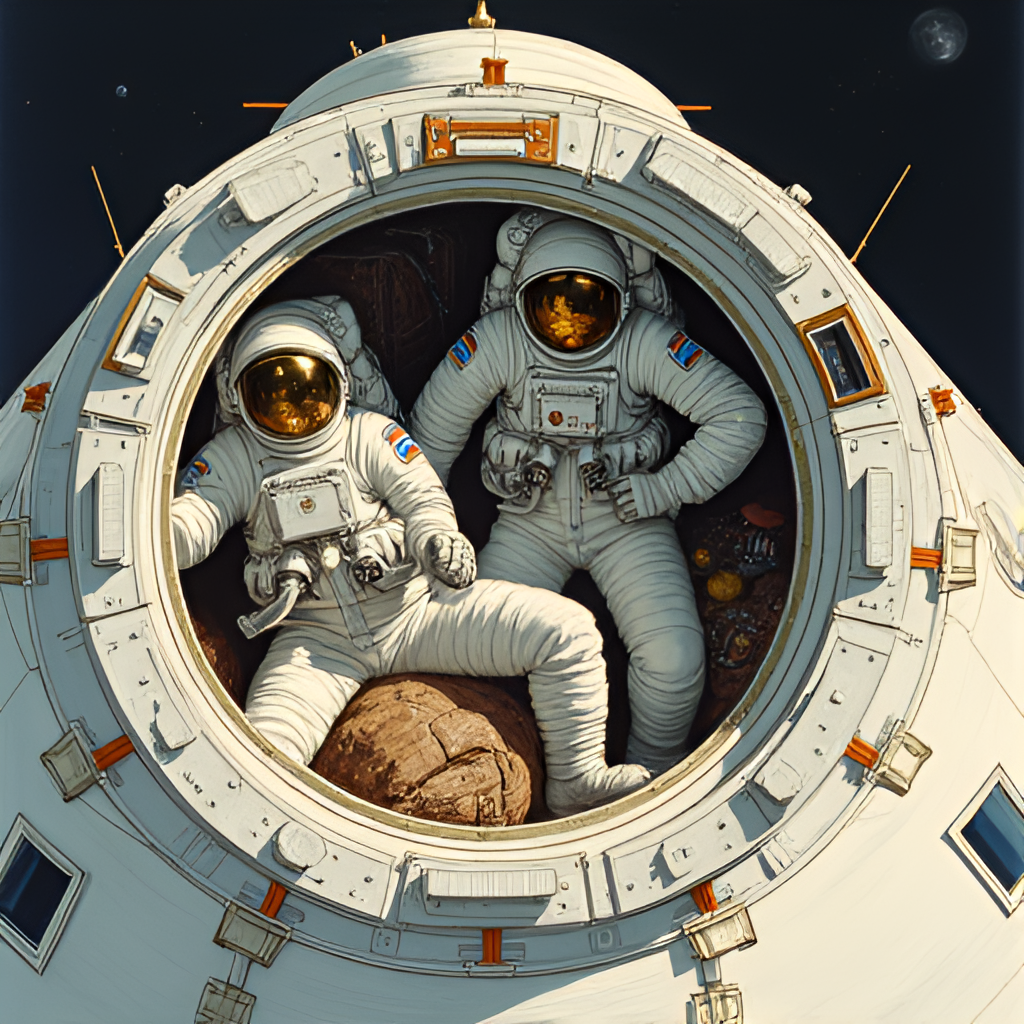
This image is a fictional image generated by GlobalTrendHub.
Return to Earth: A Harrowing Reentry and Safe Splashdown
As Apollo 13 approached Earth, the crew had to transfer back into the cold, dormant Command Module for reentry, leaving their trusty “lifeboat” Aquarius behind. Powering up Odyssey after days of being shut down was another critical moment; there was a risk of short circuits due to condensation from the cold.
The reentry itself was fraught with tension. Typically, the ionisation of the air around the Command Module causes a four-minute communications blackout. For Apollo 13, due to its shallower reentry path, this blackout lasted an agonizing six minutes. Back in Houston, fears rose that the heat shield had failed.
But finally, radio contact was re-established. Odyssey, with its crew inside, successfully splashed down in the South Pacific Ocean on April 17, 1970, near Samoa. The recovery ship, USS Iwo Jima, was waiting.
The crew was exhausted and had lost weight, and Fred Haise had developed a kidney infection due to the severe water rationing. But they were alive, a testament to their skill, the dedication of the ground crews, and a bit of luck and ingenuity.
The Enduring Legacy of the Apollo 13 Mission
The Apollo 13 mission is often referred to as a “successful failure.” While it failed to achieve its primary objective of a lunar landing, it succeeded spectacularly in bringing its crew safely back home against seemingly insurmountable odds.
It served as a crucial learning experience for NASA. The post-mission investigation identified the cause of the oxygen tank explosion – a combination of manufacturing errors, design changes (an upgraded heater element not matched by updated switches), and ground test damage. As a result, future Apollo missions incorporated modifications like an additional oxygen tank and emergency batteries to enhance safety.
Beyond the technical lessons, the Apollo 13 incident captivated a world that had perhaps become a little jaded by spaceflight successes. Millions watched and worried, and the safe return of the astronauts was a moment of global relief and celebration.
The mission highlighted the incredible collaboration and problem-solving capabilities of the NASA teams, both in space and on the ground. It demonstrated that even when faced with unexpected catastrophic failures, dedication, training, and innovative thinking can overcome desperate situations.
It reinforced the inherent dangers of space travel but also the courage and skill required to undertake it. The adaptability of the crew and the ground team, particularly in using the Lunar Module as an unplanned lifeboat and devising ingenious solutions like the CO2 scrubber adapter, showcased human ingenuity at its finest.
The story of Apollo 13 continues to resonate today, inspiring people in New Zealand and around the world. It’s a powerful example of turning a potential disaster into a demonstration of resilience, determination, and the ability to work together to solve complex problems. The phrase “failure is not an option,” famously associated with Flight Director Gene Kranz, encapsulates the spirit of the teams who worked tirelessly to bring the crew home.
We can learn so much from the Apollo 13 spaceflight – lessons in preparation, crisis management, teamwork, and never giving up, even when things look their absolute worst. It’s a story that reminds us that even in the most challenging circumstances, human spirit and ingenuity can prevail.
Conclusion: Why the Apollo 13 Mission Still Inspires
In conclusion, the Apollo 13 mission remains a pivotal event in space history, not for what it achieved on the Moon, but for what it overcame on the journey there and back. It stands as a powerful narrative of human resilience, the strength of teamwork between a crew in peril and a dedicated team on Earth, and the innovative spirit required to navigate uncharted territory – both literally and figuratively. The Apollo 13 mission proved that even in the face of a near-catastrophe, focused effort and ingenuity can snatch success from the jaws of failure. It’s a story that continues to teach us valuable lessons about preparation, problem-solving under pressure, and the enduring human drive to explore and survive, reminding us that even when things go wrong, there’s often a way through if you keep calm and work the problem.