New Zealand and NATO: A Partnership in a Changing World
- Introduction: Navigating the Complexities of Global Security
- Why New Zealand Isn’t a NATO Member (And What That Means)
- The Evolution of the NZ-NATO Relationship
- Key Areas of Cooperation Between New Zealand and NATO
- New Zealand, NATO, and the Indo-Pacific Region
- Balancing Partnership with an Independent Foreign Policy
- Looking Ahead: The Future of New Zealand’s Ties with NATO
- Conclusion: The Enduring Importance of New Zealand and NATO Working Together
New Zealand and NATO might seem like unlikely partners given the vast geographical distance separating Wellington and Brussels, yet New Zealand and NATO have a long-standing and increasingly important relationship. In a world grappling with complex and interconnected security challenges, from resurgent geopolitical competition to cyber threats and the impacts of climate change, understanding this partnership is crucial. As someone who has followed international relations for years, I find the dynamic between a small, independent nation like New Zealand and the world’s largest political-military alliance fascinating. It’s a relationship built on shared values and a mutual commitment to the rules-based international order.
This enduring connection isn’t about New Zealand becoming a NATO member – the North Atlantic Treaty restricts membership to European and North American states . Instead, it’s about a partnership that has evolved significantly over the decades, formalised through frameworks like the Individually Tailored Partnership Programme (ITPP) . This framework outlines areas of common interest and practical cooperation, demonstrating how the NZ-NATO relationship is a dynamic and effective partnership that helps protect and advance our mutual security interests .
Why New Zealand Isn’t a NATO Member (And What That Means)
Let’s get one thing straight upfront: New Zealand is not, and cannot currently be, a member of NATO. The North Atlantic Treaty clearly limits membership to countries in Europe and North America . This foundational aspect shapes the entire dynamic of the New Zealand and NATO relationship. We’re a partner, a friend from afar who shares similar concerns and values, but we don’t operate under the collective defence clause of Article 5, the famous “an attack on one is an attack on all” principle that is central to the alliance’s structure .
Being a non-member partner means New Zealand engages with NATO through cooperation programmes and political dialogue rather than the formal mutual defence commitments binding full members. This distinction is key to New Zealand’s independent foreign policy, a doctrine that has guided our international stance since the 1980s . While this policy sometimes leads to questions about alignment with traditional security partners, it fundamentally allows New Zealand to choose where and how it engages on the global stage, based on our national interests and values .
For me, observing this from a Kiwi perspective, it feels like we get to be a valuable team player on specific issues without being tied into every single play. We can contribute where our strengths and values align, offering support for the international rules-based system and engaging on shared security challenges without the full obligations of collective defence .
The Evolution of the NZ-NATO Relationship
The connection between New Zealand and NATO isn’t new; it actually dates back decades. Our cooperation began formally in 2001, though New Zealand had already deployed alongside NATO forces in places like Bosnia-Herzegovina in the late 1990s . This initial practical cooperation laid the groundwork for a more formal relationship.
A significant step was taken in 2012 with the first Individual Partnership and Cooperation Programme (IPCP) . This document provided a framework for engagement, allowing for increased strategic dialogue and operational cooperation . Our contributions to the NATO-led International Security Assistance Force (ISAF) in Afghanistan, where New Zealand led a Provincial Reconstruction Team in Bamyan Province, were a prominent example of this practical cooperation and helped transform the relationship into a genuine security partnership .
Fast forward to today, and the partnership has been updated and strengthened with the Individually Tailored Partnership Programme (ITPP), agreed in 2024 . This new framework reflects the changing global security landscape and outlines specific goals and areas for continued cooperation until 2027 and beyond . This evolution shows a clear intent from both sides to deepen ties in response to emerging threats and shared challenges .
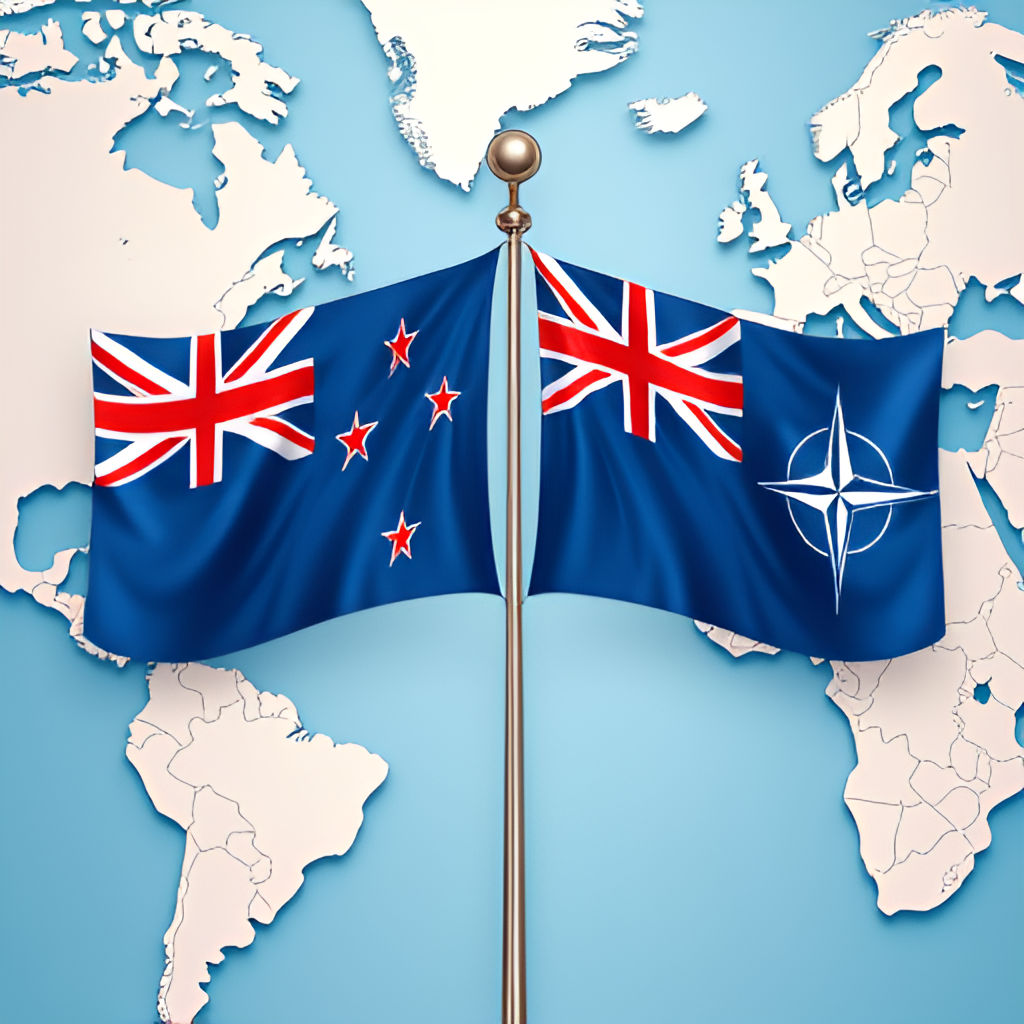
This image is a fictional image generated by GlobalTrendHub.
Key Areas of Cooperation with NATO
Our engagement with NATO covers a range of areas beyond just military operations. While contributions to past missions in places like Afghanistan, Bosnia-Herzegovina, and maritime security operations in the Arabian Gulf and Mediterranean Sea are significant , the partnership under the new ITPP is much broader. We’re talking about practical cooperation on promoting security and multilateralism .
Current areas of focus include:
- Political Consultations: Regular dialogue on security issues of common concern helps both sides understand perspectives and coordinate approaches .
- Defence Interoperability: Working together on training and exercises helps the New Zealand Defence Force operate more effectively alongside NATO forces if needed in future missions .
- Emerging Security Challenges: This is a big one. Cooperation is deepening in areas like cyber defence, maritime security, and tackling trans-boundary threats like terrorism . The recent NATO Aviation Committee meeting held in Christchurch, the first in the Indo-Pacific, highlights collaboration on air activities, resilience, and civil-military cooperation .
- Science and Technology: Sharing knowledge and collaborating on research is crucial in the modern security environment .
- Support for Ukraine: New Zealand has provided steadfast support for Ukraine’s self-defence, including contributions channeled through NATO’s Comprehensive Assistance Package and bilateral aid . We’ve even sent NZDF personnel to the UK to help train Ukrainian recruits alongside NATO allies .
This multi-faceted approach demonstrates that the partnership isn’t just about traditional military might; it’s about collaborating on the complex security challenges of the 21st century. As Foreign Minister Winston Peters put it, New Zealand is committed to working more closely with NATO partners to support collective security in a worsening strategic environment .
New Zealand, NATO, and the Indo-Pacific Region
Perhaps one of the most discussed aspects of the evolving New Zealand and NATO relationship is the increasing focus on the Indo-Pacific region. While NATO is historically focused on the Euro-Atlantic area, its Strategic Concept now acknowledges that developments in the Indo-Pacific can directly affect Euro-Atlantic security . This recognition has led to strengthened dialogue and cooperation with like-minded partners in our neighbourhood: Australia, Japan, South Korea, and New Zealand, collectively known as the IP4 .
Since 2022, leaders and ministers from these four countries have been invited to attend annual NATO meetings and summits . This increased engagement reflects the increasingly global nature of security challenges and the importance of upholding the rules-based international order in the face of challenges, particularly from a more assertive China . Joint projects focusing on areas like cybersecurity, artificial intelligence, and countering disinformation are emerging from this IP4-NATO collaboration .
From my vantage point here in New Zealand, seeing our leaders at the table with NATO counterparts underscores how interconnected global security has become. What happens in Europe or the North Atlantic has ripple effects right here in the Pacific, and vice versa. Our security is increasingly tied to that of partners across different regions.

This image is a fictional image generated by GlobalTrendHub.
Balancing Partnership with an Independent Foreign Policy
A key element often brought up in discussions about New Zealand’s relationship with alliances like NATO is our commitment to an independent foreign policy . This policy stance sometimes leads to careful navigation to balance cooperation with maintaining autonomy. Some commentators question whether closer ties with NATO align with this long-held tradition .
However, many argue that having an independent foreign policy doesn’t mean isolation; it means having the freedom to choose partnerships and engagements that serve our national interests and values . Engaging with NATO on shared challenges like cyber threats or regional stability in the Indo-Pacific can be seen as a pragmatic approach to advancing our security in a complex world . As one perspective suggests, if independence doesn’t mean freely choosing to align with partners when mutual interests are at stake, then what does it really mean?
The government’s approach appears to be one of enhanced cooperation with traditional partners like those in NATO, particularly given the worsening strategic environment . This doesn’t necessarily signal an abandonment of independent thought, but rather a recognition that in today’s world, collective action and strong partnerships are vital for even a small nation to navigate global complexities and contribute to international stability .
Looking Ahead: The Future of New Zealand’s Ties with NATO
With the new Individually Tailored Partnership Programme in place, the NZ-NATO relationship is set to continue evolving. The focus will likely remain on areas of shared security challenges, enhancing interoperability, and strategic dialogue. Given the ongoing conflict in Ukraine and increasing attention on the Indo-Pacific, cooperation in these areas is expected to deepen .
New Zealand’s continued participation in NATO summits and ministerial meetings as part of the IP4 group is a clear sign of the increasing strategic importance placed on this partnership by both sides . Projects focusing on emerging technologies, cyber defence, and countering disinformation will likely be key areas of practical cooperation .
It’s fascinating to consider how this partnership might develop further. Could New Zealand contribute more personnel to training initiatives? Will we see increased joint exercises, even if geographically distant? The ITPP provides the framework, and the specific activities will continue to be shaped by the global security environment and the mutual interests of New Zealand and NATO.
Conclusion: The Enduring Importance of New Zealand and NATO Working Together
In conclusion, the relationship between New Zealand and NATO is a testament to the interconnectedness of global security. Despite the geographical distance, our shared commitment to democratic values and the rules-based international order provides a strong foundation for cooperation. From contributing to past operations to collaborating on modern challenges like cyber security and regional stability in the Indo-Pacific, the partnership continues to grow in importance.
New Zealand’s approach, balancing an independent foreign policy with pragmatic engagement, allows us to contribute meaningfully to collective security efforts alongside a major alliance like NATO. As the world faces increasing uncertainty, the continued dialogue, cooperation, and mutual support between New Zealand and NATO are more vital than ever for navigating the complexities of the global strategic landscape and promoting international stability.