Destiny Church Protest Auckland: Unpacking the Rallies and Their Impact
- Introduction to the Complexities of Destiny Church Protests in Auckland
- A Look Back: The History of Destiny Church Protests in Auckland
- Recent Auckland Destiny Church Protests: What’s Driving Them?
- Beyond the Church: Key Figures and Associated Groups
- The Community Response and Political Commentary
- Understanding the Impact of Destiny Church Protests
- Destiny Church Protests in Auckland: A Continuing Conversation
Destiny Church protest Auckland events have become a recurring feature of the city’s landscape, often sparking significant public debate. As someone who’s followed New Zealand’s social and political movements for years, I find the nature and impact of these protests particularly compelling. These aren’t just simple demonstrations; they often involve complex motivations, controversial statements, and considerable media attention, making the Auckland Destiny Church protests a topic worth exploring in depth.
Introduction to the Complexities of Destiny Church Protests in Auckland
The image of protesters marching down Queen Street or gathering in Aotea Square has become familiar to many Aucklanders. When we talk about Destiny Church protest Auckland rallies, we’re referring to demonstrations often led or heavily influenced by Destiny Church and its founder, Brian Tamaki. These gatherings typically voice strong opinions on social, political, and religious issues, drawing both fervent supporters and vocal opposition.
Understanding the context behind these protests requires looking beyond the headlines. It involves examining the church’s history, the specific grievances being aired, and the broader societal backdrop against which these events occur. My goal here is to unpack these layers, offering insight into what drives these protests and the reactions they elicit across New Zealand.
A Look Back: The History of Destiny Church Protests in Auckland
Destiny Church has a long history of public activism in New Zealand, with protests dating back decades. One notable early example was the “Enough is Enough” march in 2004, which saw thousands protest against government policies including the Civil Union Bill. This demonstrated an early willingness by the church to mobilise its followers on issues it deemed morally significant. Another large march occurred in 2005 against the legalising of civil unions, with an estimated 10,000 participants in Auckland.
These early demonstrations set a precedent for future actions, establishing a pattern of large-scale gatherings aimed at influencing public opinion and government policy. The Defend the Legacy march in 2005 in Auckland also aimed to defend New Zealand’s Christian heritage. Over the years, the focus has shifted, but the underlying method of public protest has remained a core tactic for the church and its leadership.
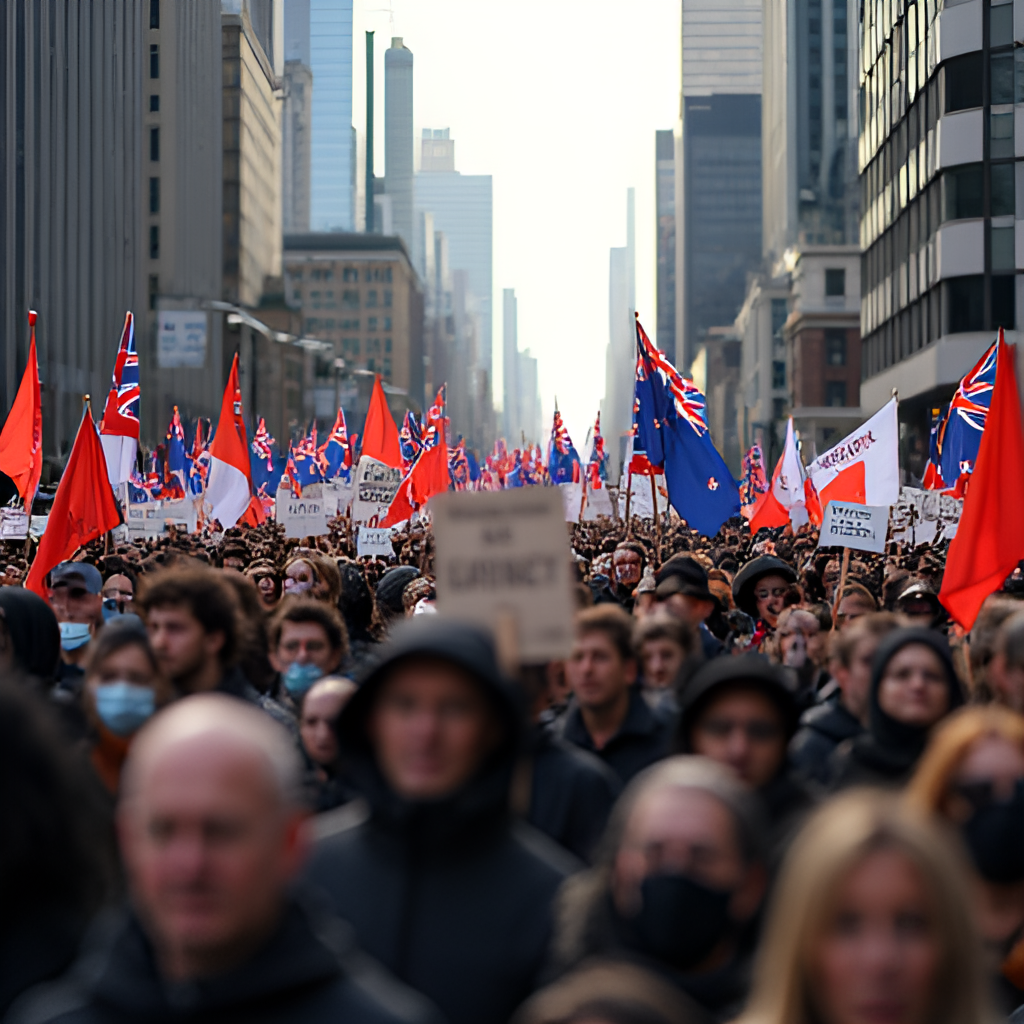
This image is a fictional image generated by GlobalTrendHub.
Recent Auckland Destiny Church Protests: What’s Driving Them?
In more recent years, the motivations behind Destiny Church protest Auckland events have diversified. While social issues remain prominent, responses to government mandates, particularly during the COVID-19 pandemic, became a major catalyst. The Freedoms & Rights Coalition (TFRC), founded by Brian Tamaki in 2021, emerged as a key organiser of protests opposing COVID-19 restrictions and vaccine mandates.
These rallies often extended beyond health mandates to encompass broader grievances about the government, the economy, and perceived threats to what the church defines as “Christian values” and “Kiwi identity.” For instance, a recent march protested against immigration and the spread of non-Christian religions, with participants chanting “no immigration without assimilation” and even setting flags alight that represented different religions and media.
Other recent protests have targeted specific events or groups, such as the controversial disruption of a children’s science show hosted by a drag artist at a library in Te Atatū, Auckland. This incident, which is currently under police investigation for alleged assaults, highlights a shift towards more direct confrontation at times.
Exploring the ‘Faith, Flag, and Family’ Narrative
A common theme underlying many recent Destiny Church protest Auckland rallies is the “Faith, Flag, and Family” slogan. This encapsulates the core tenets the protesters are seeking to defend. “Faith” represents a call for Christianity to be recognised, perhaps even as an official religion in New Zealand, and a stand against other belief systems.
“Flag” often relates to a focus on national identity and, in some cases, a protest against the display of flags other than the New Zealand ensign. Finally, “Family” typically signifies a defence of traditional family structures and values, often expressed through opposition to LGBTQ+ rights and what they see as the liberalisation of society and education.
Beyond the Church: Key Figures and Associated Groups
While Destiny Church is central, the protests in Auckland often involve a wider network. Brian Tamaki, as the leader of Destiny Church and founder of the Freedoms & Rights Coalition, is undeniably the most prominent figure. His rhetoric and calls to action are often the driving force behind specific demonstrations.
The Freedoms & Rights Coalition (TFRC) acts as a significant organising body, bringing together not only Destiny Church members but also other individuals and groups who share similar anti-government, anti-mandate, and socially conservative viewpoints. This coalition has been instrumental in coordinating larger marches and events across the country, including in Auckland.
Other associated entities, such as the Man Up and Legacy programmes linked to Destiny Church, have also been involved in protest actions, as seen in the Te Atatū library incident.
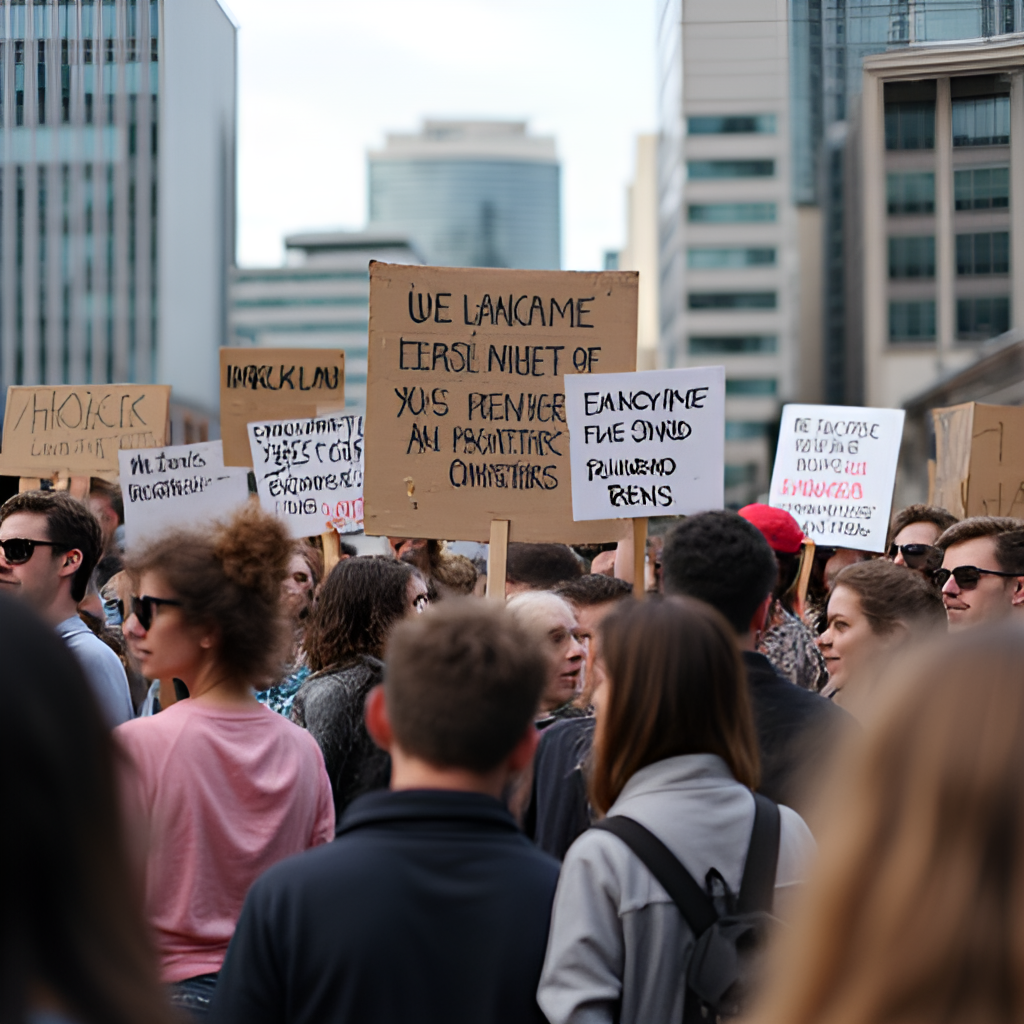
This image is a fictional image generated by GlobalTrendHub.
The Community Response and Political Commentary
Destiny Church protest Auckland events rarely occur without a response. Counter-protests are common, with individuals and groups often gathering to voice opposing views, supporting diversity and inclusivity. These counter-demonstrations can sometimes lead to tense standoffs, though police are typically present to monitor events.
The political reaction to these protests has been varied. While the right to peaceful protest is generally upheld, actions perceived as disruptive or harmful, such as the library incident, have drawn widespread condemnation from politicians across the spectrum, including the Prime Minister and Mayor of Auckland. Acting Prime Minister David Seymour recently described some of Brian Tamaki’s attitudes and the demands of the recent protest as “un-Kiwi” due to their perceived intolerance and un-inclusivity.
The media plays a significant role in covering these events, often highlighting the scale of the protests and the specific messages being promoted. This coverage itself can be a point of contention, with some protesters expressing distrust of mainstream media.
Understanding the Impact of Destiny Church Protests
The impact of Destiny Church protest Auckland events is multifaceted. On one hand, they provide a platform for the church and its allies to express their views and galvanise their supporters. They demonstrate a capacity for mobilisation, bringing significant numbers of people together at times. This can create a sense of community and shared purpose among participants.
However, the protests also generate considerable controversy. Their strong stance on social issues and, at times, confrontational tactics have led to accusations of intolerance, hate speech, and disruptive behaviour. The disruption caused to public life, such as traffic delays from marches, also draws criticism.
From an E-E-A-T perspective, assessing the impact involves looking at how these protests influence public discourse, shape perceptions of the church, and potentially impact policy discussions. While they may not always achieve their stated goals (like preventing the Civil Union Act ), they undeniably contribute to the ongoing conversation about social values, religious freedom, and the nature of protest in a democratic society like New Zealand.
A Personal Reflection on Observing Protests
Having observed various protests over the years, including some of the Auckland Destiny Church protests from a distance, I’ve often been struck by the intensity of the convictions held by those involved. Whether I agree with the message or not, witnessing people gather to passionately advocate for their beliefs is a powerful reminder of the freedoms we have in a democracy. However, my experience also tells me that the line between passionate advocacy and causing harm or disruption is one that needs careful consideration by both protesters and authorities. The Te Atatū incident, for example, felt like a clear crossing of that line, moving from protest to intimidation. It really makes you think about the responsibility that comes with the right to protest.
Destiny Church Protests in Auckland: A Continuing Conversation
In conclusion, Destiny Church protest Auckland rallies are complex social and political phenomena with deep roots and evolving motivations. From protesting civil unions decades ago to recent demonstrations against mandates, immigration, and social liberalism, these events consistently place Destiny Church and its associated groups in the spotlight. They highlight significant divisions within New Zealand society and spark important conversations about freedom of speech, tolerance, and the methods of public dissent.
The impact of these protests extends beyond the immediate disruption they might cause; they contribute to the ongoing dialogue about national identity, religious freedom, and the boundaries of acceptable public demonstration. As New Zealand continues to navigate its diverse social landscape, the presence and actions of the Destiny Church protest Auckland movement will likely remain a subject of public interest and debate.