Korean Air Crash: Learning from Tragedy to Build a Safer Future
- Introduction: The Weight of a Korean Air Crash
- A Troubled Past: Early Korean Air Safety Challenges
- Case Study: Korean Air Flight 801 – A Descent into Disaster
- Case Study: Korean Air Cargo Flight 8509 – Instrument Failure and Human Factors
- Critical Lessons Learned from Korean Air Incidents
- Korean Air’s Transformation: A Focus on Safety
- The Pivotal Role of Human Factors and CRM
- Technological Advancements in Preventing Future Accidents
- FAQs: Understanding Aviation Accident Investigations
- Conclusion: Honouring the Past, Securing the Future After a Korean Air Crash
The Korean Air crash incidents represent a challenging chapter in aviation history, serving as stark reminders of the complexities inherent in flight safety. When we think about major airline accidents, the term “Korean Air crash” unfortunately brings to mind a period where the airline faced significant scrutiny over its safety record. Having followed aviation safety developments for years, it’s clear to me that every accident, particularly those with multiple contributing factors, offers critical lessons for the entire industry. These events underscore the constant need for vigilance, robust training, and a culture that prioritises safety above all else. It’s a sobering topic, for sure, but understanding what went wrong is the essential first step in ensuring such tragedies are never repeated.
A Troubled Past: Early Korean Air Safety Challenges
Korean Air, since its establishment in 1969, experienced a number of serious incidents between the 1970s and late 1990s. This period saw multiple fatal accidents, leading to the airline being described in the late 1990s as “an industry pariah, notorious for fatal crashes”. In fact, Korea’s President at the time, Kim Dae-jung, publicly called the airline’s safety record “an embarrassment to the nation” in 1999. This difficult era involved the loss of aircraft and, tragically, many lives.
Some of these early Korean Air accidents were attributed to geopolitical factors, such as the shooting down of two aircraft by the Soviet Union, including the deadliest incident, Flight 007 in 1983, which resulted in 269 fatalities. However, many other incidents pointed towards systemic issues within the airline, including pilot training deficiencies, crew resource management problems, and maintenance concerns. This challenging safety record prompted significant external review and pressure from international aviation bodies and other airlines.
It’s easy to look back with hindsight, isn’t it? But at the time, each event, each “Korean Air incident”, highlighted areas where improvements were desperately needed. The cumulative effect of these accidents painted a concerning picture for the airline and the broader South Korean aviation sector.

This image is a fictional image generated by GlobalTrendHub.
Case Study: Korean Air Flight 801 – A Descent into Disaster
One of the most significant Korean Air accidents, and the last fatal passenger crash, was Flight 801 on August 6, 1997. This Boeing 747-300 was on approach to Guam International Airport when it crashed into Nimitz Hill, tragically killing 229 of the 254 people on board.
The investigation by the U.S. National Transportation Safety Board (NTSB) identified a combination of factors contributing to this controlled flight into terrain (CFIT) accident. The probable cause included the captain’s failure to adequately brief and execute the non-precision approach, coupled with the first officer’s and flight engineer’s failure to effectively monitor and cross-check the captain’s actions.
Several contributing factors were highlighted. The captain was experiencing fatigue. There was poor communication among the flight crew. Crucially, Korean Air’s flight crew training was deemed inadequate, particularly regarding non-precision approaches and crew resource management (CRM). The NTSB report also mentioned that the Minimum Safe Altitude Warning (MSAW) system at Guam had been deliberately inhibited, preventing it from alerting the crew to their dangerously low altitude.
The NTSB investigation details reveal a concerning breakdown in fundamental cockpit procedures and teamwork. The flight crew were confused about and did not react appropriately to a series of Ground Proximity Warning System (GPWS) alerts. Despite these urgent warnings, and the flight engineer’s calls, the crew did not assess their position correctly or initiate a missed approach. This specific Korean Air crash became a major focal point for implementing significant changes within the airline.
Case Study: Korean Air Cargo Flight 8509 – Instrument Failure and Human Factors
Another critical incident, Korean Air Cargo Flight 8509, occurred on December 22, 1999. This Boeing 747-200F crashed shortly after take-off from London Stansted Airport, resulting in the deaths of all four crew members.
The investigation by the UK’s Air Accidents Investigation Branch (AAIB) found that an Inertial Navigation Unit (INU) had partially failed, providing erroneous roll data to the captain’s attitude director indicator (ADI), essentially their artificial horizon. While the first officer’s ADI and a backup were correct, the captain appeared to rely on the faulty instrument.
A comparator alarm sounded multiple times, indicating a discrepancy between the two main ADIs, and the flight engineer repeatedly called out concerns about the bank angle and instrument reliability. However, the captain maintained a left roll input, leading to an extreme left bank. The AAIB report highlighted that the pilots did not respond appropriately to the warnings despite the flight engineer’s prompts. This incident painfully underscored the dangers of instrument reliance without cross-checking, insufficient communication, and a hierarchical cockpit culture where challenge was difficult.
The investigation also touched upon maintenance issues, noting that a repair attempt on the faulty ADI prior to departure did not resolve the underlying problem. This Korean Air incident further emphasised the need for robust maintenance procedures and effective communication between ground crews and flight crews.
Critical Lessons Learned from Korean Air Incidents
Analysing these and other Korean Air accidents reveals recurring themes that were prevalent challenges for the airline during this period. One significant area was human factors, particularly concerning Crew Resource Management (CRM). CRM training is designed to improve teamwork, communication, and decision-making in the cockpit.
In incidents like Flight 801 and Flight 8509, breakdowns in communication, a lack of effective monitoring by the non-flying pilot, and difficulty challenging the captain’s decisions were identified as critical contributing factors. Aviation safety experts widely recognise that human error contributes to a significant majority of aviation accidents.
Another key lesson related to pilot training, specifically in handling non-precision approaches and responding to instrument failures or warnings like GPWS/EGPWS alerts. The NTSB explicitly stated that Korean Air’s inadequate pilot training contributed to the Flight 801 crash.
Furthermore, these incidents, including the Stansted Korean Air crash, highlighted the importance of maintenance procedures and ensuring that known defects are properly rectified and communicated to the flight crew.
Korean Air’s Transformation: A Focus on Safety
In response to its safety record and the international pressure that followed, particularly after the 1997 Guam crash and the 1999 Stansted crash, Korean Air undertook a significant and well-documented effort to improve safety standards.
The airline brought in outside consultants, notably from Boeing and Delta Air Lines, to help overhaul its training programmes and operational procedures. Delta Air Lines had even suspended its code-sharing agreement with Korean Air in 1999, explicitly citing safety concerns, and resumed it in 2002 after significant improvements were noted.
These efforts included substantial investment in new technology, enhanced pilot training, and a concerted focus on changing the corporate culture to one that openly encourages communication and questioning within the cockpit, moving away from a strictly hierarchical structure.
The U.S. Federal Aviation Administration (FAA) had downgraded South Korea’s air safety rating in 2001 due to concerns, impacting Korean carriers’ ability to expand in the U.S. This rating was later restored, acknowledging the country’s and Korean Air’s significant strides in improving safety practices. By 2008, South Korea had achieved one of the highest scores in a safety audit by the International Civil Aviation Organization (ICAO).
It’s clear that the airline took the criticisms seriously and implemented fundamental changes. This transformation demonstrates that an airline, even one facing significant safety challenges, can make dramatic improvements through dedicated effort and investment. The past “Korean Air crash” incidents served as painful catalysts for this necessary evolution.
The Pivotal Role of Human Factors and CRM
The focus on human factors, particularly Crew Resource Management (CRM), was a cornerstone of Korean Air’s safety improvements. Accidents worldwide consistently show that how pilots and crew members interact, communicate, and make decisions under pressure is paramount to safety.
CRM training, which originated in the 1970s, teaches skills like effective communication, leadership, followership, problem-solving, and situational awareness. It aims to create an environment where all crew members feel empowered to speak up if they perceive an issue, regardless of rank. This was a significant cultural shift needed within Korean Air, addressing the hierarchical norms that may have hindered critical challenges in the cockpit during past incidents.
By investing heavily in advanced CRM training, Korean Air aimed to break down these barriers and foster a genuine team environment in the cockpit. This focus directly addressed issues identified in the investigations of crashes like Flight 801 and Flight 8509.
Technological Advancements in Preventing Future Accidents
Beyond human factors, technological advancements have played a crucial role in enhancing aviation safety, including preventing the types of controlled flight into terrain (CFIT) accidents seen in past Korean Air incidents.
The development and mandatory adoption of systems like the Enhanced Ground Proximity Warning System (EGPWS), now part of Terrain Awareness and Warning Systems (TAWS), have been game-changers. Unlike older GPWS systems that only looked directly below the aircraft, EGPWS uses GPS data and a digital terrain database to provide predictive warnings of terrain ahead, giving pilots more time to react and avoid impact.
The NTSB noted that the inhibited MSAW system contributed to the Flight 801 crash. Modern TAWS systems are far more sophisticated and are a critical layer of defence against CFIT, which was a factor in several historical Korean Air accidents. While technology is not a standalone solution, when combined with effective training and crew procedures, it significantly reduces the risk of certain types of accidents.
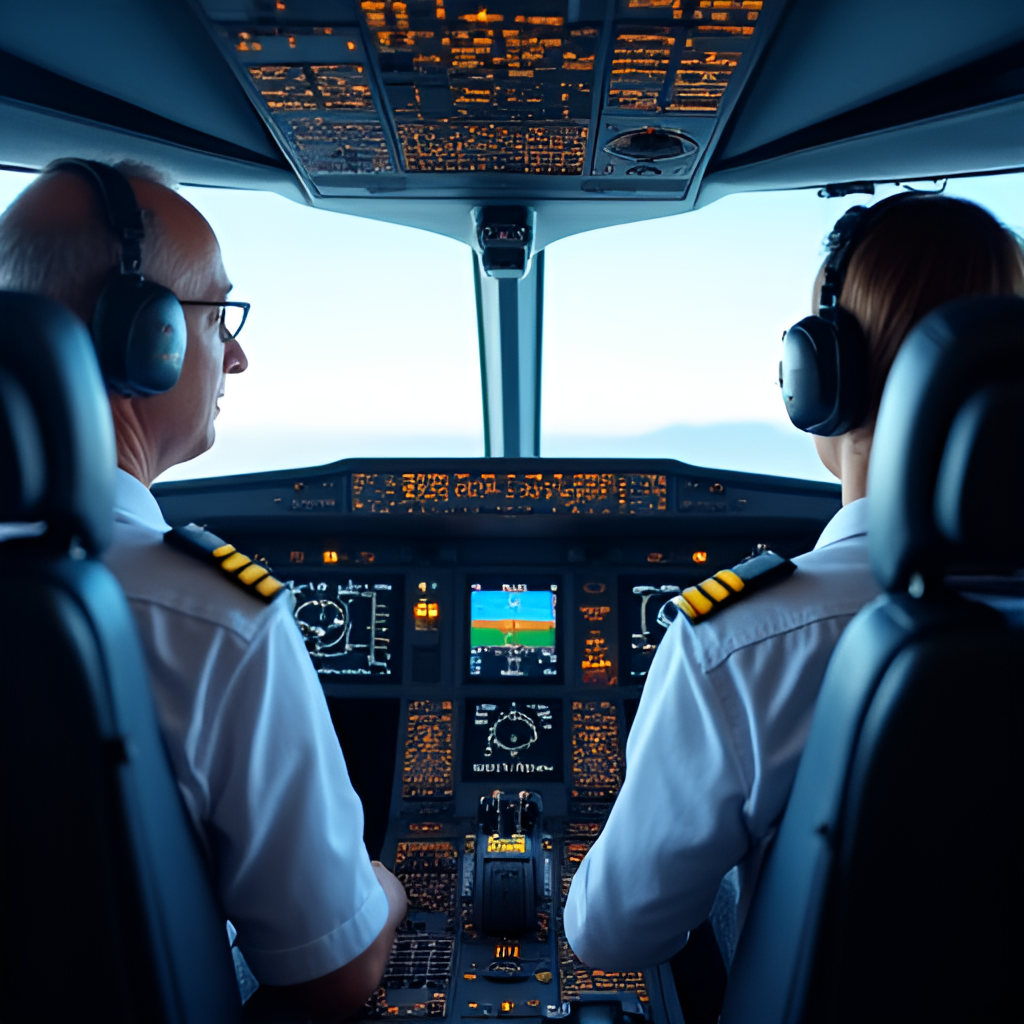
This image is a fictional image generated by GlobalTrendHub.
FAQs: Understanding Aviation Accident Investigations
Accidents like the past Korean Air crash events often raise questions about how investigations are conducted and what their purpose is. Here are a few common questions:
- Who investigates aviation accidents? This depends on where the accident occurs. Lead investigators are typically from the country where the crash happened (e.g., NTSB in the U.S. , AAIB in the UK ). They are often assisted by representatives from the country where the aircraft was manufactured (e.g., U.S. for Boeing ), the country where the airline is registered (e.g., South Korea ), and the International Civil Aviation Organization (ICAO).
- What is the primary goal of an accident investigation? The main goal is not to assign blame, but to determine the probable cause(s) of the accident and make safety recommendations to prevent future occurrences.
- How do investigators gather information? They use various sources, including Flight Data Recorders (FDR) and Cockpit Voice Recorders (CVR) (the “black boxes”), air traffic control recordings, eyewitness accounts, aircraft maintenance records, and examination of the wreckage.
Understanding the thorough and objective nature of these investigations helps illuminate how the valuable, albeit painful, lessons from a Korean Air crash or any other aviation accident are identified and used to improve safety worldwide.
Conclusion: Honouring the Past, Securing the Future After a Korean Air Crash
Reflecting on the history of the Korean Air crash incidents is a sobering exercise, reminding us of the human cost of aviation accidents and the continuous effort required to maintain and improve safety standards. The period marked by a concerning number of Korean Air accidents prompted a fundamental shift within the airline and contributed to broader advancements in global aviation safety, particularly in the areas of human factors, training, and technology.
Through significant investment in training, technology, and a crucial change in corporate culture, Korean Air has dramatically improved its safety record over the past two decades. This transformation is a testament to the aviation industry’s commitment to learning from every incident and striving towards the goal of zero accidents. While the term “Korean Air crash” carries historical weight, the airline’s subsequent safety improvements demonstrate resilience and a dedication to preventing future tragedies. As someone who values the incredible safety record of modern aviation, seeing how past challenges spurred such positive change is truly encouraging.