Auckland Weather: A Guide to the City of Sails Climate
- Introduction to Auckland’s Varied Climate
- Understanding the Seasons: Auckland’s Weather Month by Month
- What Shapes Auckland’s Weather? Key Influences
- Navigating the Changes: Tips for Auckland’s Weather
- Climate Change and the Future of Auckland Weather
- Making Sense of Auckland’s Ever-Changing Skies
Auckland weather is, shall we say, *a conversation starter* here in New Zealand. If you’ve lived here for any length of time, you know the classic line: “If you don’t like the weather, just wait five minutes!” While a bit of an exaggeration, that saying holds a kernel of truth about the variability you experience in the City of Sails. My experience living and working across Auckland has taught me that understanding its unique climate isn’t just for meteorologists; it’s essential for planning your day, your week, and even your wardrobe!
Nestled between two harbours and stretching across a narrow isthmus, Auckland has a fascinating climate. It’s often described as a temperate maritime climate, though some classify it as humid subtropical. Regardless of the technical term, it means we get warm, humid summers and mild, wet winters. Unlike other parts of New Zealand that might see significant frosts or snow, Auckland generally avoids the extremes, though frosts can occur in some inland areas. Rainfall is spread throughout the year, but it does tend to peak in the winter months.
Let’s be honest, the weather in Auckland can be unpredictable. One minute it’s glorious sunshine, perfect for hitting the beach or exploring a regional park, and the next you could be caught in a sudden downpour. It’s this mix of sunny spells and sporadic rain that keeps things interesting (and occasionally frustrating!). But armed with a little knowledge about what to expect, you can make the most of this vibrant city, come rain or shine.
Understanding the Seasons: Auckland’s Weather Month by Month
To really get a handle on Auckland weather, it helps to look at it seasonally. Each season brings its own distinct characteristics, though there’s always room for variation – that’s just Auckland for you!
Summer (December – February)
Ah, Auckland summer! This is what draws many people here. Generally, you can expect warm temperatures, plenty of sunshine, and higher humidity. Average daily maximums sit around 22-24°C (71-75°F), often reaching highs of 30°C. January is typically the hottest month. While we get lots of sun, don’t be surprised by heavy, often sudden, rain showers, sometimes even extending into December. My personal trick for Auckland summers? Always have a light rain jacket or umbrella tucked away, even on the clearest mornings.
December and January tend to be the sunniest months, with averages around 200-240 hours of sunshine. February is often the driest month in terms of total rainfall, though July sees the most.
Autumn (March – May)
Autumn in Auckland is often described as settled and pleasant. Temperatures start to cool down from the summer highs, ranging from around 7-20°C (45-70°F). It can be a lovely time to be outdoors, with stable weather patterns before the winter rain sets in. March can still feel quite warm and retains high sunshine levels. April and May see temperatures continue to drop, signalling the clear shift towards the cooler months.
Winter (June – August)
Winter brings cooler temperatures and more rain to Auckland. July is typically the coldest month, with average daily temperatures around 11-11.3°C (52-52.3°F). While it’s cooler, it’s generally mild compared to other parts of the country, and snowfall in the city is extremely rare – think once in a generation! Rain is more frequent and heavier during winter, peaking in July and August. Days are shorter, and sunshine hours decrease significantly compared to summer. You’ll definitely need a good waterproof jacket and maybe some layers during these months.
Spring (September – November)
Spring is a season of transition in Auckland. Temperatures gradually warm up, ranging from 8-18°C (46-65°F). Rainfall starts to decrease from the winter peak, although October can still be quite wet. Sunshine hours increase, and you begin to feel the warmth of summer returning. Spring can be quite changeable, with a mix of sunny days and sudden showers, living up to that “four seasons in one day” reputation!
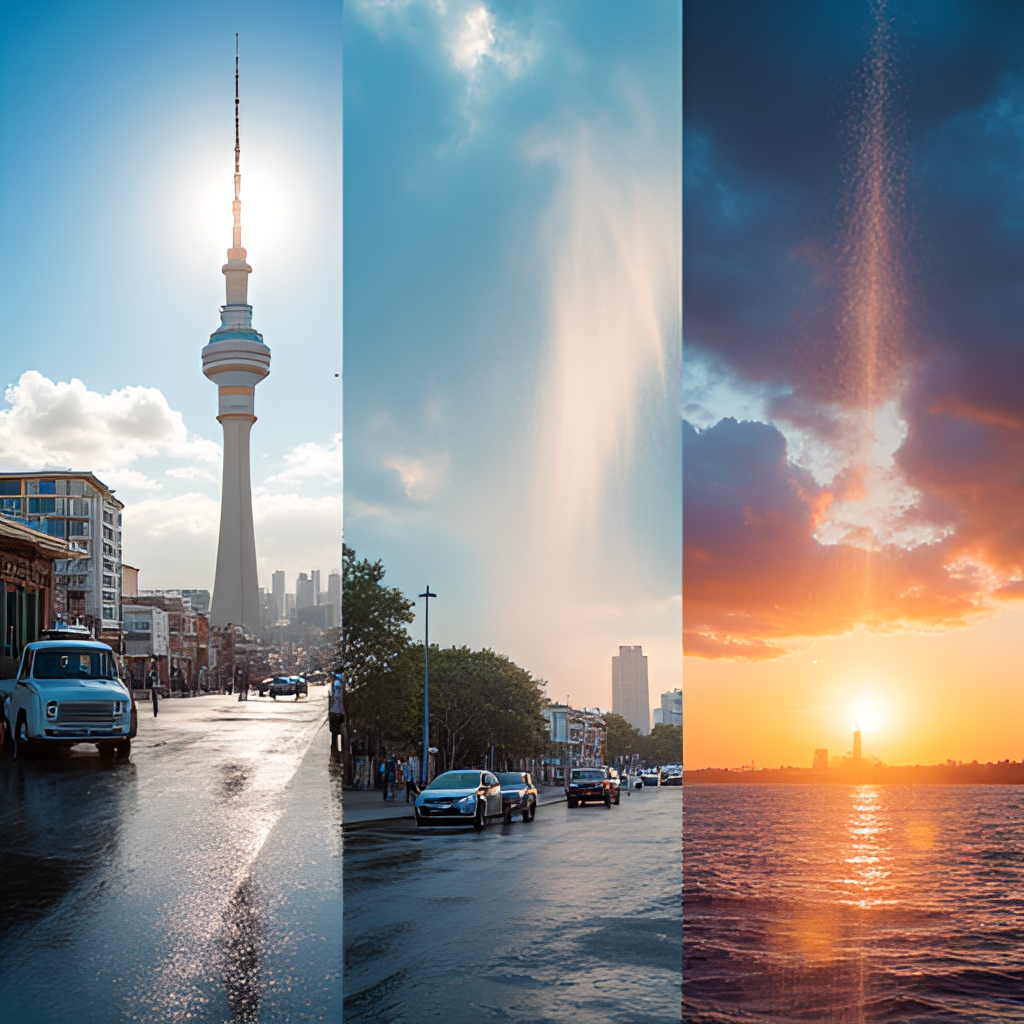
This image is a fictional image generated by GlobalTrendHub.
What Shapes Auckland’s Weather? Key Influences
Why is Auckland’s weather so variable? A few key geographical and atmospheric factors play a big role:
- Location, Location, Location: Auckland sits on a narrow isthmus with harbours on either side (the Waitematā and Manukau). This coastal proximity means sea breezes are a common feature, particularly in summer, adding to humidity and influencing local temperatures.
- Prevailing Winds: The dominant airflow over Auckland is from the southwest, especially in winter and spring. However, in summer, winds from the northeast become more frequent due to the positioning of high-pressure systems. Rain in Auckland is often associated with northerly winds.
- Tasman Sea and Pacific Ocean: Being surrounded by these large bodies of water moderates Auckland’s temperatures, preventing the extreme highs and lows you might find inland or in continental climates. They also provide the moisture for rainfall.
- Weather Systems: Auckland is on the path of weather systems crossing the Tasman Sea. While less vulnerable to Antarctic air outbreaks than the South Island, it can be affected by remnants of tropical storms, especially in summer.
Understanding these influences helps explain why the forecast can change rapidly. A shift in wind direction or the movement of a low-pressure system can completely alter the conditions over the city.
Navigating the Changes: Practical Tips for Auckland Weather
So, how do you cope with Auckland’s changeable weather? Here are a few practical tips based on my own experiences and what locals recommend:
Layering is Key: This is the number one piece of advice. Even on a seemingly warm day, a cool breeze can pick up, or the temperature can drop rapidly if a cloud rolls in. Starting with a base layer, adding a t-shirt or shirt, and having a jumper or jacket you can easily take on and off is essential.
Always Carry a Rain Layer: Whether it’s a compact umbrella or a lightweight, packable rain jacket, having something waterproof with you is just good sense, especially outside of the driest summer months. I’ve been caught out too many times thinking I wouldn’t need it!
Check the Forecast (But Be Flexible): Use reliable sources like MetService New Zealand. Look not just at the temperature but also wind direction, expected rainfall, and timings. Remember, however, that even the best forecasts can’t always capture hyper-local or sudden changes, especially thunderstorm activity.
Plan for Both Indoors and Outdoors: When planning activities, especially during the cooler or wetter months, have a backup plan. If a hike gets rained out, is there a museum, gallery, or cafe nearby you can duck into? Auckland has plenty of indoor options.
Be Mindful of Humidity: Summer humidity can make warm temperatures feel hotter than they are. Factor this into your activity planning and stay hydrated. The muggiest period is typically from December to March.
Coastal vs. Inland: Remember that areas right on the coast might feel cooler due to sea breezes than inland suburbs. If you’re heading to the beach, expect it to be a bit breezier.

This image is a fictional image generated by GlobalTrendHub.
Climate Change and the Future of Auckland Weather
Like many places globally, Auckland is already experiencing the effects of climate change, and these are projected to become more pronounced. Over the past century, Auckland’s mean annual temperature has increased significantly. Projections indicate further warming this century, leading to more “hot days” (above 25°C). This means summers could become warmer and potentially longer.
Rainfall patterns are also expected to shift. While total annual rainfall might not change drastically, the distribution is likely to alter, with potentially less rain in spring and more in autumn. Crucially, extreme rainfall events are projected to increase in intensity. We’ve already seen how events like the Auckland Anniversary floods in 2023 can cause widespread disruption and damage, highlighting the vulnerability to intense downpours.
Drought is also projected to become more common and severe due to changing rainfall patterns and rising temperatures. This has significant implications for water resources in the region.
Furthermore, rising sea levels pose a serious threat to Auckland’s extensive coastline, increasing the risk of coastal erosion, storm surges, and flooding, impacting infrastructure and ecosystems.
These changes mean that adapting to more frequent extreme weather events and understanding the long-term shifts in Auckland’s climate will be increasingly important for residents, businesses, and city planners. You can find detailed projections and information on the Auckland Council website.
Making Sense of Auckland’s Ever-Changing Skies
So, what’s the takeaway from all this talk about Auckland weather? It’s a city with a generally mild, temperate maritime (or humid subtropical) climate that experiences significant variability. While you won’t typically deal with snowstorms or extreme heatwaves, you need to be prepared for a mix of conditions, often within the same day.
Understanding the seasonal trends – the warm, humid summers, the mild, wet winters, and the changeable shoulder seasons – is key to planning your time in the city. By dressing in layers, having a rain-ready attitude, and keeping an eye on reliable forecasts (while acknowledging their limitations), you can enjoy everything Tāmaki Makaurau has to offer.
The future of Auckland weather, influenced by global climate change, points towards warmer temperatures and more intense rainfall events. This underscores the importance of staying informed and adaptable. Ultimately, the unique and sometimes unpredictable nature of Auckland weather is just another part of its character, a dynamic backdrop to life in this beautiful New Zealand city.