Antwerp: A Diamond Sparkle, Fashion Edge, and Rich History
- Welcome to Antwerp: More Than Just Diamonds
- Antwerp: The World’s Diamond Hub
- Antwerp’s Cutting-Edge Fashion Scene
- Exploring Antwerp’s Historic Centre and Architecture
- A Taste of Antwerp: Must-Try Foods and Drinks
- Navigating Antwerp: Public Transport and More
- Why Antwerp Should Be Your Next Destination
Antwerp, a vibrant city in the Flemish Region of Belgium, is truly more than just its famous diamond trade; it’s a place where history, fashion, and culture converge, offering a captivating experience for any visitor. Having spent time exploring its charming streets and diverse neighbourhoods, I can personally attest to the unique energy that makes Antwerp special. This city, located about 40 km north of Brussels and connected to the North Sea by the Scheldt River, is Belgium’s most populous municipality and a major European port.
When you think of Antwerp, chances are “diamonds” immediately spring to mind. It’s true; the city has been a global centre for the diamond trade since the 15th century. The Antwerp Diamond District, often called the Diamond Quarter or even the “Square Mile,” is a fascinating area near the Central Station where a staggering amount of the world’s rough diamonds are traded. In fact, estimates suggest that a significant percentage of the world’s rough diamonds pass through Antwerp at least once. While some cutting and polishing have moved elsewhere, Antwerp remains a crucial hub with numerous workshops, brokers, and trading exchanges.
My experience walking through the Diamond Quarter was truly eye-opening. The sheer number of diamond businesses packed into such a small area is incredible. You see glittering displays in windows, but the real action happens behind closed doors in the bourses. It’s a secretive world, steeped in history and dominated by various communities, including a significant Jewish population, who have historically played a major role in the trade. Despite facing challenges, such as competition and the impact of sanctions on Russian diamonds, the Antwerp diamond industry remains vital to the Belgian economy, supporting thousands of jobs.
The history of how Antwerp became the world’s diamond capital is quite interesting. It began gaining prominence in the 15th century, partly due to its strategic location on the Scheldt River. The invention of the scaif, a new diamond polishing tool in the 15th century, also played a crucial role in attracting craftsmen to the city. Over the centuries, the industry grew, with the Jewish community being particularly instrumental in its development after World War II.
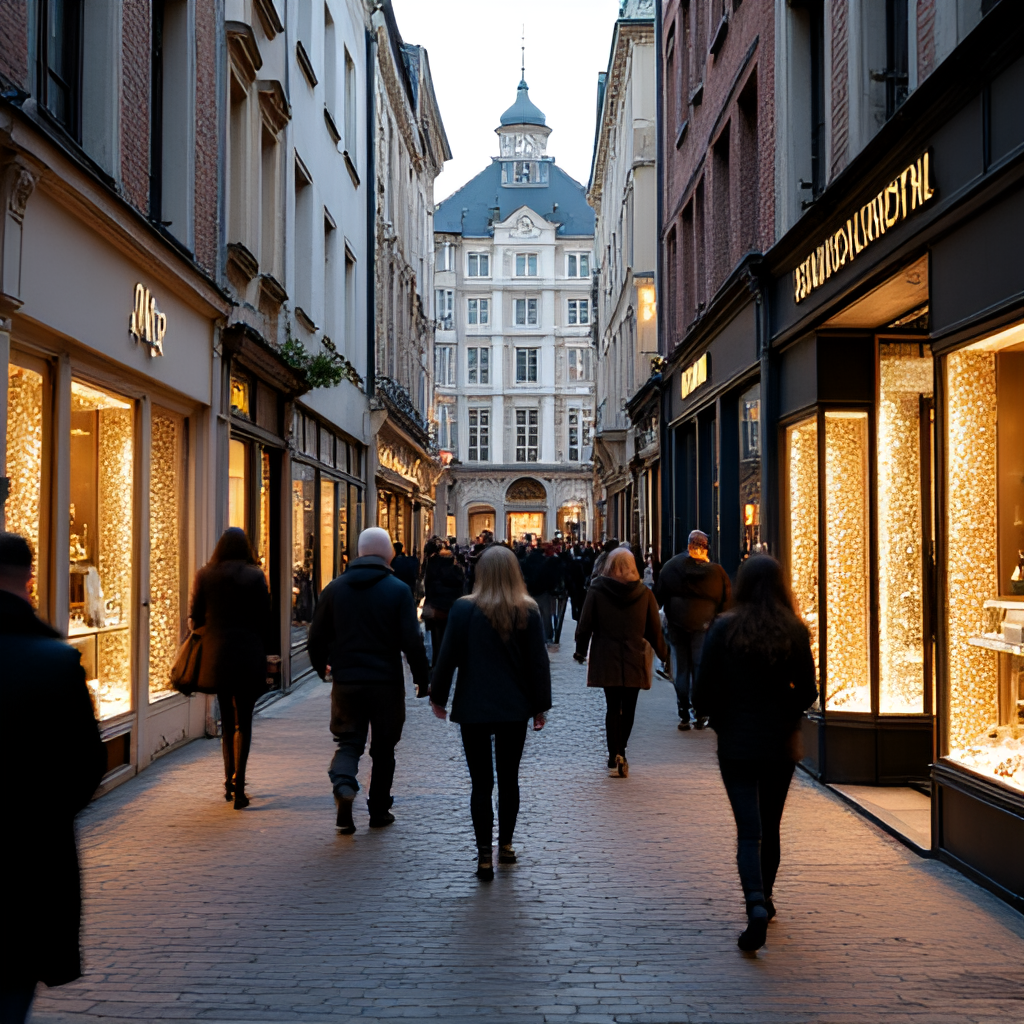
This image is a fictional image generated by GlobalTrendHub.
Challenges and the Future of Antwerp’s Diamond Trade
It hasn’t always been smooth sailing for the Antwerp diamond industry. Recent years have seen a decline in trade figures, influenced by geopolitical tensions, economic slowdowns, and increased competition from synthetic diamonds. The G7 ban on Russian diamonds, in effect since January 2024, has also significantly impacted imports, as Russia was a major source of rough diamonds for Antwerp. This has led to concerns about the future, with calls for government support to ensure Antwerp remains competitive.
Despite these hurdles, there’s a push towards greater transparency and sustainability in the industry, which could be a silver lining for Antwerp, already known for being a transparent diamond centre. International companies are reportedly interested in relocating to Antwerp, though they face administrative challenges.
Beyond the Bling: Antwerp’s Diverse Economy
While diamonds are undeniably a major player, Antwerp’s economy is diverse. The Port of Antwerp is one of the largest in the world, ranking second in Europe after Rotterdam. It’s a massive complex vital for international trade and contributes significantly to the city’s identity.
Moving on from the sparkle, Antwerp is also renowned globally as a significant fashion centre. The city has a strong heritage in design and creativity, largely attributed to the prestigious Royal Academy of Fine Arts. The emergence of the “Antwerp Six” in the 1980s, a group of avant-garde designers who gained international recognition for their innovative work, cemented Antwerp’s place on the global fashion map.
Exploring the fashion scene in Antwerp is a delight. You’ll find high-end boutiques alongside independent shops, particularly around the Fashion Museum (MoMu). MoMu itself is a must-visit for anyone interested in Belgian fashion, showcasing its evolution and impact. I remember being struck by the creativity and unique style of the fashion students I saw around the city; they really embody Antwerp’s design spirit.
Antwerp’s influence extends beyond clothing to design and architecture. The city is a fascinating blend of historical styles, from Gothic and Renaissance to modern. You can see this in its landmarks, like the stunning Cathedral of Our Lady, a Gothic masterpiece, and the modern, striking Port House designed by Zaha Hadid.

This image is a fictional image generated by GlobalTrendHub.
The Enduring Legacy of the Antwerp Six
The impact of the Antwerp Six – designers like Dries Van Noten, Ann Demeulemeester, and Dirk Bikkembergs – cannot be overstated. They were pioneers who challenged conventions and brought a fresh, avant-garde perspective to the fashion world. Their success put the Royal Academy of Fine Arts Antwerp on the international stage and continues to inspire new generations of designers.
Other Creative Hubs in Antwerp
Beyond fashion, Antwerp has a rich artistic heritage, with famous painters like Peter Paul Rubens having lived and worked here. His former home is now a museum, the Rubenshuis, which offers a glimpse into his life and work. The city also has numerous museums and galleries showcasing a wide range of art and design, including the Royal Museum of Fine Arts Antwerp (KMSKA) and the Museum aan de Stroom (MAS).
Stepping into Antwerp’s historic centre is like stepping back in time. The Grote Markt, the main square, is a stunning focal point, surrounded by ornate guild houses and the impressive City Hall. It’s a perfect spot to soak in the atmosphere and admire the architecture. Nearby, the Cathedral of Our Lady, a UNESCO World Heritage site, is a breathtaking example of Gothic architecture and houses important artworks.
One of Antwerp’s oldest buildings is Het Steen, a medieval fortress located along the Scheldt River. It has a rich history, having served various purposes over the centuries, and now houses a visitor centre. Walking along the riverfront near Het Steen offers lovely views and a sense of the city’s maritime past. Another unique experience is walking through the Sint-Annatunnel, a pedestrian tunnel under the Scheldt with old wooden escalators.
Antwerp’s Architectural Tapestry
Antwerp’s architecture tells the story of its past and present. From the medieval and Renaissance buildings in the old town to the Art Nouveau houses in areas like Zurenborg and modern structures like the MAS and the Port House, there’s a fascinating mix of styles. Even the Central Station, often called the “railroad cathedral,” is an architectural marvel.
No visit to Antwerp is complete without indulging in the local culinary scene. Belgian food is famous, and Antwerp offers plenty of opportunities to sample delicious treats. Fries (or frites), served with mayonnaise, are a must-try, and you’ll find excellent friteries around the city. Moules-frites (mussels and fries) are another classic Belgian dish widely available.
Belgian chocolate is, of course, world-renowned, and Antwerp has fantastic chocolatiers where you can sample exquisite pralines. Keep an eye out for “Antwerpse Handjes” (Antwerp Hands), hand-shaped biscuits or chocolates that are a symbol of the city, referencing a local legend.
For those looking for something more substantial, try Waterzooi, a creamy Belgian stew, or Carbonnade, a Flemish beef stew often made with beer. And, of course, Belgium is famous for its beer, with a wide variety of local brews to discover in traditional bars.
Discovering Local Food Spots
My personal culinary adventures in Antwerp included trying stoofvlees at a cozy restaurant recommended by a local – it was absolutely delicious and comforting. Exploring the side streets also led me to charming cafes and bakeries with tempting pastries. For a unique experience, consider visiting Pakt, a creative urban space with restaurants and bars.
Getting around Antwerp is relatively easy, thanks to its efficient public transport system operated by De Lijn. Trams and buses cover most areas of the city, making it convenient to reach major attractions. Day passes are available and can be a good value for tourists.
Antwerp is also a bike-friendly city with dedicated bike lanes and a bike-sharing scheme called Velo, which is a great way to explore at your own pace. Walking is also a pleasant way to discover the historic centre and other key areas, as many attractions are within walking distance of each other.
Practical Transport Tips
When using public transport, remember that you can buy tickets through the De Lijn app, at kiosks, or from the driver (though it might cost a bit more onboard). During peak hours, trams and buses can get crowded, so planning accordingly is a good idea. Taxis and ride-sharing services are also available but are generally more expensive.
In conclusion, Antwerp is a city that truly offers a multifaceted experience. From the historic Diamond Quarter and its ongoing importance in the global trade of Antwerp diamonds to its status as a cutting-edge fashion capital and its rich history reflected in stunning architecture, there’s something to captivate everyone. As someone who has experienced the vibrant energy and diverse offerings of this Belgian gem firsthand, I can confidently say that Antwerp is a destination that rewards exploration and leaves a lasting impression. Its blend of historical significance, creative spirit, and culinary delights make it a must-visit city.